A New Mast Goes Up. The Customer Slows Down.
Fixed wireless beyond the fibre footprint lives or dies on where the antenna is pointed.
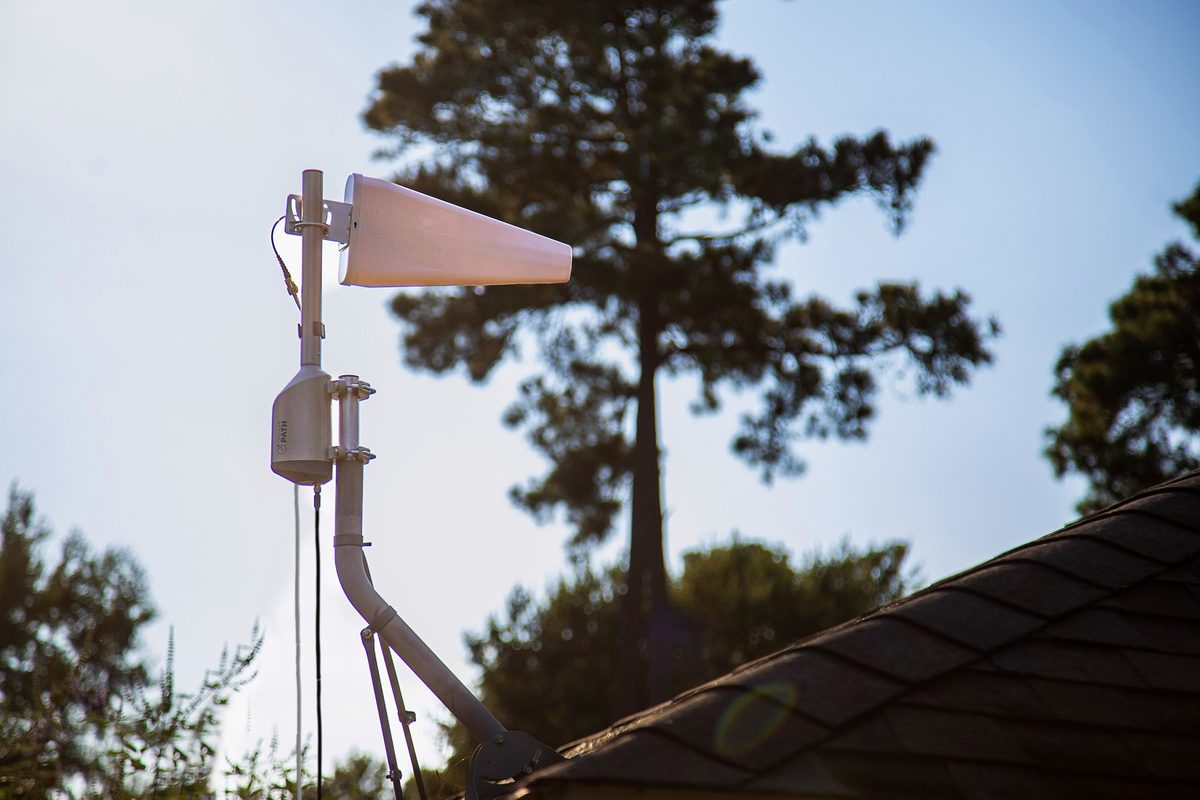
The directional antenna is aimed at the mast that measured best on the day of the install. Months later the operator lights a new site, refarms a band, or the cell fills up in the evenings.
Speed falls, the customer calls, and the answer is an engineer, a ladder and an hour of turning an antenna by hand while somebody reads numbers off a phone.
97 km/h sustained. Gusts to 145 km/h.
Cellular Path's datasheets rate the rotator at 60 mph sustained wind and 90 mph gusts, with an IPX2 ingress rating, which is what puts it on a roof or a wall pole rather than in a loft.

Distributed in the UK by Boothroyd Distribution.
Specifications and photographs are Cellular Path's own, published by it and reproduced here under our distribution agreement. The photographs were taken at sites in the United States. Cellular Path and SOCA are trade marks of Cellular Path, Inc.
Trade Only. Resellers Buy From Us.
We supply resellers and installers, not end users. Applications are read by the engineer who will answer the technical questions afterwards.
Apply For A Trade Account